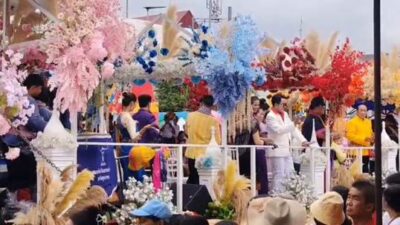
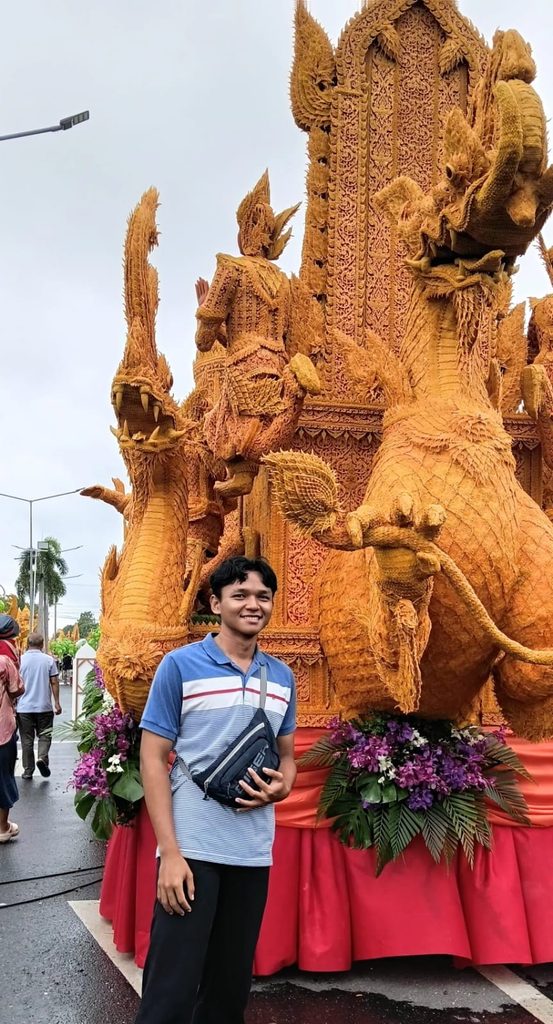
lkui.umsida.ac.id – Towering wax sculptures depicting dragons, serpents and scenes from Buddhist legend rolled through the streets of this northeastern Thai city this month, drawing crowds of residents and visitors for the annual Candle Festival marking the start of Buddhist Lent.
The three-day public holiday coincides with Asalha Puja and Khao Phansa, two of the most significant dates on Thailand’s religious calendar. Asalha Puja commemorates the day the Lord Buddha delivered his first sermon, and Khao Phansa marks the beginning of the three-month “rains retreat,” during which Buddhist monks remain inside their temples to study and meditate.
The custom dates back to a time before electricity, when communities donated candles to temples so monks would have light to study by during the retreat. In Ubon Ratchathani, that simple offering grew over the decades into a large-scale display, with districts competing to produce the most elaborate wax sculptures, some the product of months of work by local artisans.
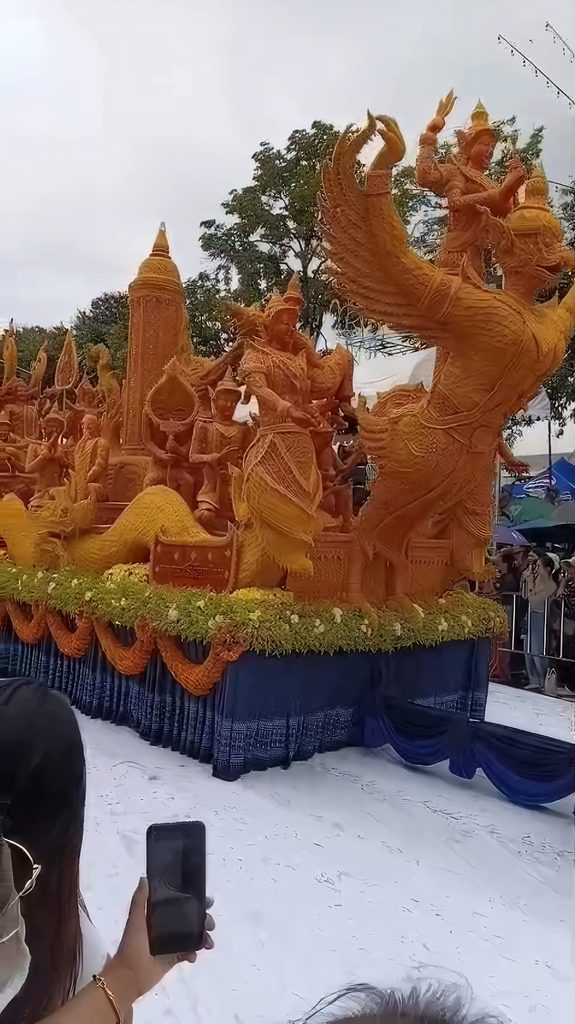
For Abimael, an Indonesian exchange student currently based in Thailand, the festival offered a first look at a tradition unlike anything in his home country. Abimael traveled nine hours to attend, saying the trip was worth it for an experience Abimael never had before. “I had never seen anything like it,” He said. “The scale of the sculptures, the detail in something made only of candle wax — it doesn’t look real until you’re standing in front of it.”
Related article: UMSIDA and Sorsogon State University Philippines Seal Strategic Global Partnership via Virtual Signing Ceremony
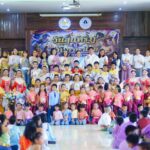
Performers take part in the festival’s traditional dance program, one of several cultural showcases held alongside the candle parade.
Beyond the parade of candle floats, festival grounds hosted traditional dance performances and singers whose repertoires spanned older folk styles and newer influences, including jazz. Abimael said he was struck by performers’ synchronized movements, describing a signature swinging arm motion repeated throughout several routines. Schools from cities across the region also took part, presenting their own candle displays alongside dance and music performances — a tradition organizers and attendees say gives younger generations a direct role in keeping the festival alive.
Organizers and longtime attendees describe the festival as more than a spectacle. Because it falls during a public holiday, many Thais use the days off to travel home and reunite with family, adding a personal dimension to the citywide celebration.
“It’s not just for show,” Abimael said. “People here learn to appreciate each other’s culture — older performers and younger audiences both seem to enjoy it together.” He called the visit one of the most memorable experiences of his time studying in Thailand — a rare chance, he said, to see a centuries-old tradition still very much alive.
Source: Abimael Samlin