lkui.umsida.ac.id – It was supposed to be a quiet stop on the way home from a school exhibition. Abimael, an intern student from the English Language Education Study Program, who is participating in an internship in Bang Wangtaen School, Thailand, had traveled with Dr. Prakit, the school director, for the 10th Learning City Fest, an educational showcase that had drawn teachers and students from around the region. But after the long drive from Wang Saphung in Loei province toward Bueng Kan, the day took an unexpected turn: a detour to one of northeastern Thailand’s most talked-about natural landmarks, Hin Sam Wan — the Three Whale Rock. (04/09).
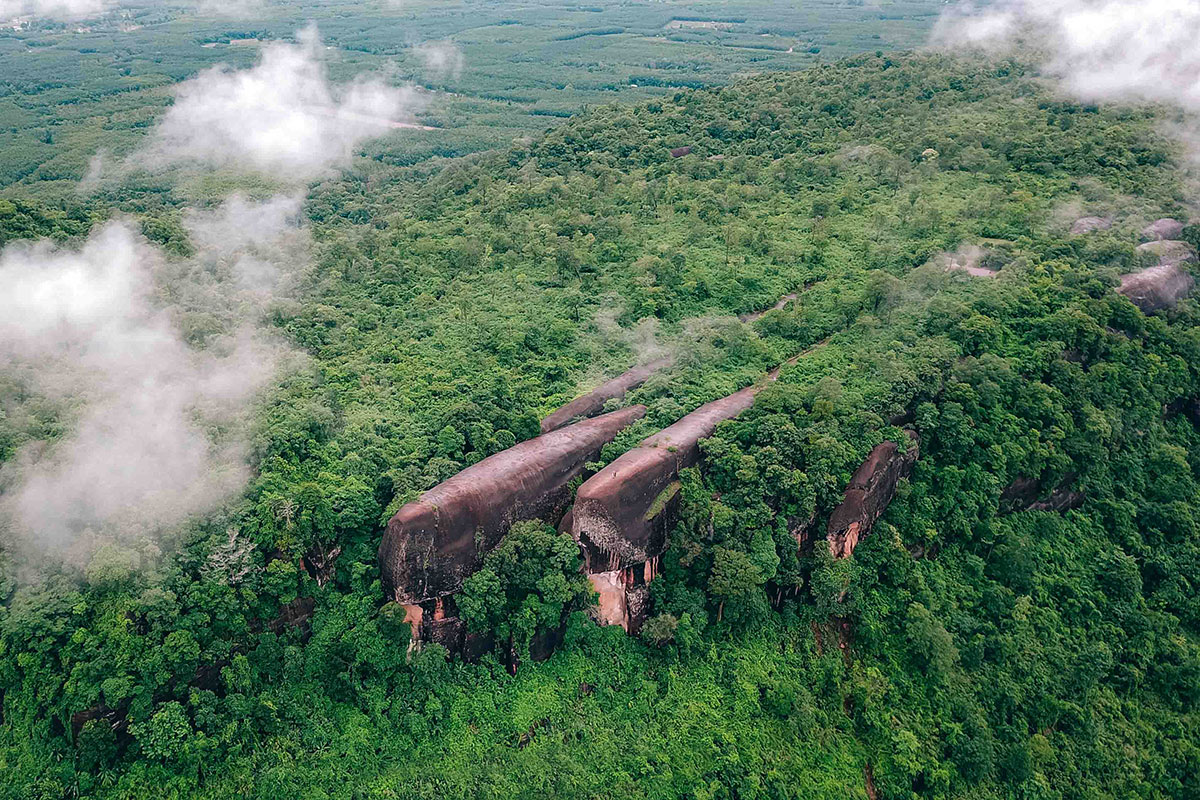
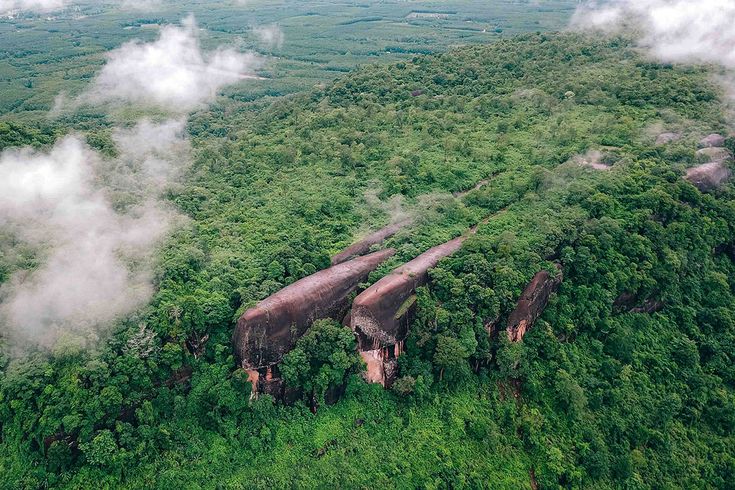
The rock formation, whose Thai name translates literally to “Three Whales Rock,” has quietly become one of Isan’s signature attractions since drone footage of its uncanny, whale-shaped silhouette began circulating online several years ago. Geologists date the sandstone to roughly 75 million years, part of the same Khorat Plateau formations that have yielded some of the region’s dinosaur fossil discoveries. Perched at the crest of a cliff inside Phu Singh Forest Park, the rocks are said locally to resemble a mother whale, a father whale, and a calf breaching from a green sea of forest canopy.
Also read: Esil University Lakukan Kunjungan dan Penandatanganan MoA dengan UMSIDA
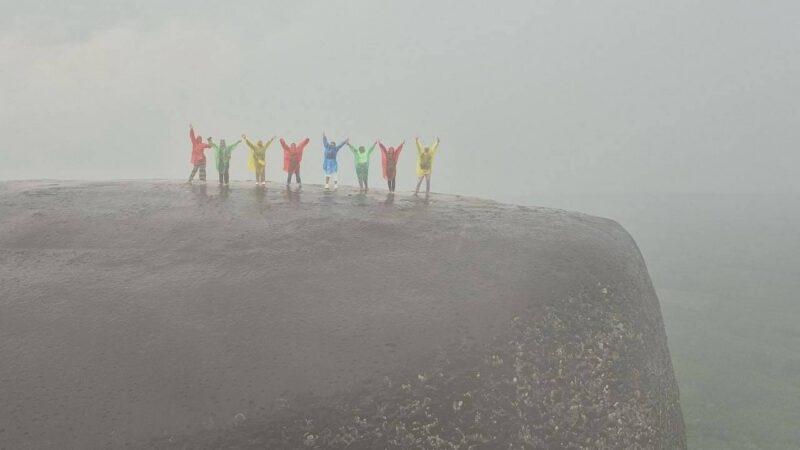
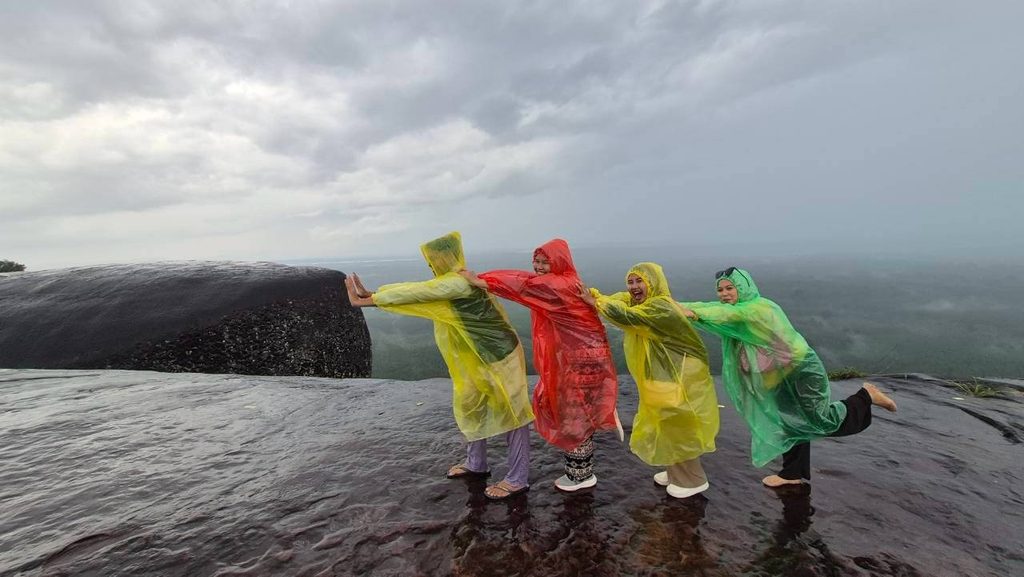
Of the three formations, only two are considered safe enough for visitors to walk on; the smallest, or “baby whale,” remains off-limits. On the day of the visit, rain had swept across the plateau, and with no railings along the exposed cliff edge, the park’s usual caution carried extra weight. Abimael, mindful of the slick stone and the drop beyond it, chose to stay off the smaller formation altogether rather than risk a fall — a decision echoed by longtime visitors who describe the rock as breathtaking but unforgiving underfoot.
Reaching the two accessible whales is its own undertaking. Visitors typically ride open-backed pickup trucks along a steep, rutted track that climbs through mud pits and dense brush — a ride locals half-jokingly call part of the attraction. Along the way, the route threads past traditional wooden houses and patches of forest that hint at what a full hike to the summit might feel like on foot. It was bumpy and, at moments, nerve-racking, but by most accounts it is also where the adventure actually begins.
Also read: Menjadi Tamu di Acara Student Initiation of EAGI Kazakhstan
Along the trail, one lesser-known rock outcrop draws its own attention: a stone shaped uncannily like a reclining human figure, a curiosity many visitors pause to photograph before continuing toward the main formation. The final approach to the summit runs through a narrow, unlit cave — the kind of passage that looks foreboding from the outside and, true to form, offers little more light once inside. Visitors emerge from the dark only when a faint glow from the far end signals the way out.
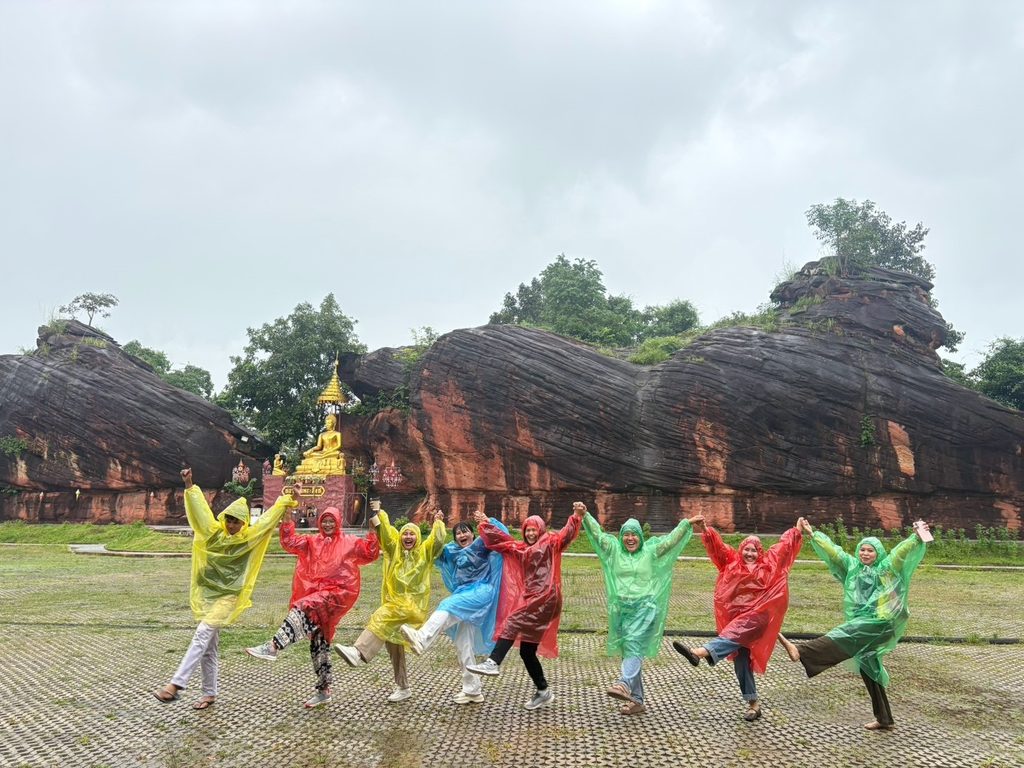
What waits beyond the cave is the reward locals talk about most: a sweeping viewpoint over the surrounding provinces, and on clear days, as far as the forested hills of Laos across the Mekong River. On this particular afternoon, fog rolled over the ridge, softening the view rather than erasing it — a reminder that in Bueng Kan, the weather is as much a part of the landscape as the stone itself.
For Abimael, a teacher whose work usually keeps him closer to a classroom than a cliffside, the trip became something more than a scenic detour. Abimael described the climb as a lesson in its own right — that fear is a natural companion to any real challenge, but it need not be the deciding one. Reaching the top, he said, felt like proof that persistence, even after a long and uncertain journey, tends to pay off.
Whether these experiences become a once-in-a-lifetime visit or the first of many, “the trip is one I won’t forget, an unplanned chapter tacked onto a school exhibition trip that turned into a small pilgrimage up one of Isan’s strangest and most photogenic landmarks.” Abimael said. “Keep pushing through, and don’t forget to smile along the way,” he added.
*Hin Sam Wan is located in Phu Singh Forest Park, roughly 25 kilometers southeast of Bueng Kan town. Access is by park-operated pickup truck; entry and vehicle fees apply. Visitors are advised to check trail conditions before climbing during the rainy season.
Source: Abimael Samlin